|  |
| |


Book reviews (Re?) Designing Education, Ethically and Psychologically
What Are We Doing to Our Children?
A Portrait of Samuel Hartlib: In Search of Universal Betterment
Creativity in the English Curriculum
Susan Isaacs: A Life Freeing the Minds of Children
Ignorance
Education in Spite of Policy
What is Education about?
Mary Warnock: Ethics, Education and Public Policy in Post-War Britain
Enfield Voices
Who Cares About Education? ... going in the wrong direction
Grammar School Boy: a memoir of personal and social development
The Passing of a Country Grammar School
Living on the Edge: rethinking poverty, class and schooling
Education under Siege: why there is a better alternative
New Labour and Secondary Education, 1994-2010
Politics and the Primary Teacher
School Wars: The Battle for Britain's Education
Children, their World, their Education
Education Policy in Britain
School behaviour management
Supporting the emotional work of school leaders
Faith Schools: consensus or conflict?
The Professionals: better teachers, better schools
Education Policy in Britain
Who Controls Teachers' Work?
Faith-based Schools and the State
The Best Policy? Honesty in education 1997-2001
Love and Chalkdust
State Schools - New Labour and the Conservative Legacy
Experience and Education: Towards an Alternative National Curriculum
Bullying: Home, School and Community
Bullying in Schools And what to do about it
A Community Approach to Bullying
Teacher Education and Human Rights
Troubled and Vulnerable Children: a practical guide for heads
Supporting Schools against Bullying
Bullying: a practical guide to coping for schools
Financial Delegation and Management of Schools: preparing for practice
Reforming Religious Education: the religious clauses of the 1988 Education Reform Act
Re-thinking Active Learning 8-16
Two Cultures of Schooling: The case of middle schools
|
A Portrait of Samuel Hartlib: In Search of Universal Betterment Charles Webster 2025 Cambridge: Open Book Publishers 290pp., Paperback £22.95 ISBN 978-1-80511-691-2; Hardback £35.95 ISBN 978-1-80511-692-9 also available as a free download in various formats Review by Derek Gillard
© copyright Derek Gillard 2025
After a short spell in the Philosophy Department at Leeds University, in 1968 he was elected to a research fellowship at Corpus Christi College, Oxford, later becoming a University Reader. From 1988 until his retirement he was a Senior Research Fellow of All Souls College. He is an Emeritus Fellow at both Corpus and All Souls. One of his particular interests has been the history of health care and, from 1982 to 1997, he was Official Historian of the National Health Service. His interest in Hartlib began in 1962, when the huge archive of Hartlib's papers, which had been discovered in 1933 and had become the subject of extensive work by George Turnbull, was transferred to Sheffield and he was able to continue Turnbull's work. He published books on the subject in 1970 and 1975, and since his retirement - and in the light of major advances in the availability of material relating to Hartlib - he has been able to devote more time to the project, of which this book is the result. Incidentally, in the spring of 2009 I spent several months scanning Charles's collection of George Turnbull's typed transcriptions of the Hartlib papers and producing an electronic text. So I feel honoured to have contributed - albeit in an exceedingly small way - to this great project.
Yet he left an extensive archive - around 30,000 sheets including more than 5,000 letters and 1,200 pages of his Ephemerides - all the more remarkable considering the very poor health he suffered in the last decade of his life. He also played 'a significant role as a publisher' (3). His life spanned a period dominated by religious and political turmoil culminating in the English Civil War and the establishment of the Commonwealth (1649-1660). He was an enthusiastic supporter of Parliament, and his association with the political elite was such that when, in 1653, the Nominated Assembly convened the Committee for the Advancement of Learning, half its members were well-known to Hartlib and 'the committee was strongly biased in Hartlib's favour' (149). Although Hartlib's 'political usefulness' (134) mainly related to domestic affairs, he was also 'valued for his international associations' (134). In 1655, for example, he was involved in the debate about Britain's role in an international Protestant alliance when London became 'a gathering place for diplomats from most of the leading Protestant powers' (134). Politics and religion notwithstanding, education was Hartlib's 'most absorbing interest' (33) and he was able to draw on a 'substantial body of talent' (92) including Comenius, John Milton, Benjamin Worsley, Robert Boyle, William Petty, John Hall, William Rand and Joseph Mede. He was supported by patrons such as Sir Cheney Culpeper, Dorothy Moore and Lady Ranelagh, and, with John Dury, he began sketching out 'plans for all manner of educational and research organisations' (89) in which 'the sciences and their practical applications were the predominant focus of attention' (91). He played 'a major role in the leadership of the intellectual community' (94), and showed great interest in technical, chemical and agricultural innovation, particularly in schemes for economic or scientific improvement, including the work of John Pell on mathematics and Gabriel Plattes on agriculture. He and his associates made proposals for the reform of Oxford and Cambridge universities and for the establishment of other institutions for higher education specialising in, for example, teacher training, but little came of these proposals, nor of the various schemes for 'a radical extension of opportunities for children's education' (155). More successful were plans for the University of Durham, which quickly became an institution 'very open to innovation' with staff interested in 'the latest developments in the sciences' (157). However, progress 'suddenly ground to a halt in the chaos surrounding the collapse of the Republic' (157). As to Hartlib's domestic life, he married Mary Burningham in 1629 and it is easy to imagine, says Webster, the scale of the burden she carried: Always handicapped by meagre resources, she hosted an unending stream of Protestant exiles ... housed and supervised Hartlib's team of amanuenses ... needed to care for more important guests ... and had to make provision for the endless stream of casual daily callers (196-7).In these circumstances, says Webster, the Hartlibs 'lost sight of their obligations to their three children' and their care and education seems to have fallen into abeyance. 'Considering Hartlib's famed dedication to education, and his respect for educated women, his apparent indifference to education within his own family constitutes something of a shock' (197). In his last years Hartlib faced increasing poverty (his £200-a-year state allowance was withdrawn after Oliver Cromwell's death) and worsening health. He faced the prospect that 'his final days would be spent in poverty and insecurity' (225). Yet despite these 'multiple distresses', says Webster, his efforts were relentless and 'it is evident that he remained a man worth knowing' (208). His large circle of associates included figures 'of significant standing' (209) such as Nicolaus Mercator, John Ray, Petr Figulus, and William (later Lord) Brereton, who became the guardian of his papers. Hartlib died 'still in an undiminished state of excitement about his ever-expanding intellectual horizons, but also in a spirit of some despondency concerning the hazards affecting many of the ventures to which he had lent support' (248). In his Epilogue, Webster argues that Hartlib's status within the scientific and technical community needs re-evaluating: He cannot be written off as a marginal eccentric. Rather, he was clearly perceived by scientifically inclined specialists among his contemporaries as a figure of authority and respect, who was recognised as playing a decisive role in mediating the adaptation of Baconianism to the conditions of the new age (253).Hartlib achieved and retained his position of leadership in both the economic and scientific fields 'owing to his inexhaustible energy and relentless curiosity' (253). His 'deeply held reformist inclinations never stood in the way of association with allcomers displaying common interests' (256). And his ability to withstand countless setbacks 'must be understood in the context of his lifelong experience. From the days of his youth Hartlib had lived in an environment of political and social disruption' (256). In his final footnote, Webster notes 'the closeness of Hartlib's relations with New England, and therefore ... with the foundation of Harvard College and the embryonic college that soon became Yale.' He concludes: 'Long may these institutions, without hindrance, continue to protect the values that Hartlib held dear' (258). The book includes copious footnotes and ends with a comprehensive bibliography and an alphabetical subject index. Charles Webster writes about Hartlib with obvious admiration but not uncritically, describing him as having 'numerous' weaknesses (5) but whose positive qualities were so many that he captured and maintained the admiration and confidence of members of every generation among his contemporaries, many of whom judged him to have achieved the status of a national, indeed, international institution, so much so that, among those who knew him best, he seemed to be irreplaceable (5-6).My summary of the book is by no means comprehensive: there is a huge amount of information - not just about Hartlib himself but about the political, social and religious circumstances in which he lived and worked. So it will, I believe, appeal to a wide range of readers: to those interested in the politics and religious ideas of 17th century England; to those who want to know more about the early development of science and technology; and, of particular relevance to users of this website, to those with an interest in the history of education. A Portrait of Samuel Hartlib is the product of decades of interest and painstaking research - a real labour of love. And it shows. It is also a very timely book. In an age when far right governments and groups around the world are preaching hatred of immigrants - and of anyone who is in any way different - it is a book by the son of East European refugees about a Polish immigrant who spent his life welcoming and supporting refugees from across Europe.
Further reading For more information about Charles Webster and his publications, see his entry on the Corpus Christi website and this Wikipedia page. The Hartlib Papers: a complete electronic edition with full-text transcription and facsimile images of all 25,000 seventeenth-century manuscripts developed by the Humanities Research Institute at The University of Sheffield. For more on the political, religious and educational background of this period, see chapter 3 of my history. 
|
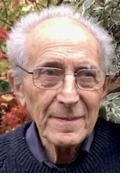 CHARLES WEBSTER (pictured), the son of East European political refugees, grew up in Nottingham, where his first job, at the age of 16, was as a laboratory technician for the Boots Company. He studied for his A levels at night school and went on to gain a degree in botany and microbiology from University College London. He trained as a teacher in Sheffield, and then, from 1959 to 1965, taught science at the city's grammar school, publishing his first historical paper in Nature in 1962.
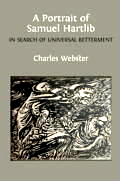 So who was Samuel Hartlib? Born in Elbing in Poland around 1600, he spent seven years as a private student at Cambridge. He returned briefly to Elbing where he met John Dury: the pair 'discovered a common interest in education' (page 26) and became lifelong friends. In 1628, Hartlib took up permanent residence in London as 'an immigrant without professional status or recognised employment, and with no settled income' (1). Indeed, throughout his life he suffered 'perpetual financial difficulties' (19) and after his death in 1662 he 'sank into oblivion' (1).