1944 Education Act
The Education Bill
The White Paper's proposals formed the basis of the Education Bill which had its first reading in the Commons in December 1943. The Times (17 December 1943) described it as 'a masterpiece of compromise and an inspiring embodiment of educational advance' (quoted in Middleton and Weitzman 1976:283). It was supported by Anglicans and Nonconformists.
Butler and Ede shared the handling of the bill in the Commons: Butler dealt with Anglican and Conservative interests; Ede with the Nonconformists and 'the more awkward Labour spokesmen' (Middleton and Weitzman 1976:283). Butler always managed, when pressed, to find a small concession, but he stood firm on the basic principles of the bill. Both men were able speakers - 'Butler perhaps pedestrian in style, but his logic was always formidable'; while Chuter Ede had 'a pert turn of phrase which could drive home a telling point without causing resentment' (Middleton and Weitzman 1976:283-4).
The original draft of the bill - containing 111 sections - was long and complicated. More than a thousand amendments were tabled, of which 340 were debated and 114 were accepted:
Although many of these were important to some section of the educational interest none of them materially altered the basic line of the Bill which was one of careful concession so framed that expenditure should be moderate and the timing of the advances should remain with the government (Middleton and Weitzman 1976:283).
The passage of the bill was not easy. On the Conservative side, the Commons contained 'a large number of old-style Tories who found the agitation for reconstruction most disturbing' (Middleton and Weitzman 1976:285). However, there were about forty 'progressive Tories' - including Peter Thorneycroft, Henry Brooke, David Eccles, Hugh Molden and Lady Astor - whose influence had grown as public support for social reconstruction policies had increased. Led by Lord Hinchingbrooke and Quentin Hogg, they formed the Tory Reform Committee.
The Labour Party, meanwhile, had no clear education programme of its own and its MPs would have preferred a measure on rehousing or reform of the social services. Nonetheless, they regarded the bill as generally acceptable and sought to ensure its success.
Concerns were expressed on both sides of the House that the proposed reduction in the number of local authorities posed the danger of over-centralisation. In a long and passionate debate about how schools should be linked with the communities they served, former Parliamentary Secretary to the Board of Education Kenneth Lindsay (1897-1991) argued that parents should be represented on governing bodies. Butler was 'unimpressed with these arguments' (Middleton and Weitzman 1976:293) but was forced to rewrite the clause relating to the appointment of governors.
There were calls for a maximum class size to be written into the bill; for nursery schools to be incorporated into the general school system; for a timetable for the completion of Hadow reorganisation; and even for a list of specific audio-visual items to be provided in schools. Butler managed to deflect them all.
However, proposals regarding the provision of school meals and the extension of the school medical service were passed, and a Labour amendment to upgrade the education department to a ministry was widely supported in the House, despite being resisted by the Cabinet.
Among the issues which roused most anger was that of equality. The bill, it was noted, said nothing of any significance about the public schools. During the second reading of the bill, MP for Romford John Parker explained the commonly held Labour view:
Educationally, today, this country is a country of three nations. If you take the adult population, only 2 per cent have been to the so-called 'public' school. What proportion of this present House of Commons have had the privilege of that type of education? Fifty-six per cent have had the privilege of going to these independent so-called 'public' schools. Looking at the other members of our education system, men and women educated at State-aided secondary schools form 5 per cent of the population, but in this House 21½ per cent have been to that type of school. If you take people who have only been to elementary schools, they form 92 per cent of our people, and in this House 22 per cent. Can you say, from these figures that we have an educational system at the present time which is a proper national system trying to make the best of the talents of the whole nation? Quite obviously, you cannot claim that the privileged 2 per cent of the nation is so highly talented as to justify a 56 per cent representation in this House of Commons. We take the view that we must have a national, all-embracing educational system for two reasons. First to find out and train the most talented to fill the most responsible posts. Secondly because if you are to have a democratic system working properly, the whole people must have a high standard of education - a standard of education which will enable them to form judgments on the issues coming before them and the knowledge on which to base those judgments (Hansard House of Commons 19 January 1944 Vol 396 Cols 234-5).
Another contentious issue was the notion of parity between the different types of school within the tripartite system. Kenneth Lindsay told the Commons:
there is a great deal of humbug going on at this time. Sooner or later there will come a clash. Anybody who says to me that the children attending the 450 odd unreorganised departments in London, with some 40,000 children, are attending the same type of school as the grammar schools which have existed for many years, with a sixth form producing classical and other scholars who have gone on to Oxford and Cambridge for the last 200 years, is talking nonsense. The two things have no relation to each other. Yet in this comprehensive way we say that these are all secondary schools Hansard House of Commons 9 March 1944 Vol 397 Col 2258.
One amendment called for the abolition of fee-paying in direct grammar schools. Butler rejected the idea:
One of the fundamental principles on which this Bill has been built is that there shall be a variety of types of schools. One of the varieties which I think is quite legitimate is that there shall be schools in which it is possible for parents to contribute towards the education of their children (Hansard House of Commons 28 March 1944 Vol 398 Col 1303).
The amendment was defeated by 183 votes to 97.
The religious issues had the potential to be the most divisive.
On the Nonconformist side, there were concerns about areas of the country where there was a single voluntary school - usually belonging to the Church of England. It had initially been decided that such schools would be taken over by the local authority - until it was realised that there were more than 4,000 of them: 'it was inconceivable that a Parliament with 430 Conservative MPs, mostly around the age of 60, could agree to such a handover, no matter the justice of the cause' (Middleton and Weitzman 1976:301).
However, Butler's political skill ensured that the question was settled 'without open rupture' (Middleton and Weitzman 1976:302): it was agreed that teaching according to the local agreed syllabus would be available in all these schools.
The Roman Catholic Church was unhappy about the financial arrangements for its schools. Butler offered long-term loans at reasonable interest and this 'went some way to meet the Catholic case without causing abrogation of the agreements on which the religious settlement had been built' (Middleton and Weitzman 1976:303).
The proposal to make religious instruction and collective worship compulsory roused much interest. Not all of it was favourable, with one MP declaring that the collective act of worship would become 'organised blasphemy'. Nonetheless, the vote on the clause was 121 to 20 in favour, so it stayed in the bill.
On 21 March 1944, the Tory Reform Committee forced a division on an amendment to include in the bill a firm date for raising the school-leaving age to sixteen. With the support of Labour backbenchers, they achieved the largest vote against any part of the bill, though the proposal was defeated by 137 votes to 172.
A week later, on 28 March, the Tory Reform Committee tabled another amendment, requiring equal pay for men and women teachers. A lengthy debate ensued, during which a number of MPs left the chamber for lunch assuming that there would probably not be a division and that, if there was, the government would easily win. In fact, the amendment was carried by 117 to 116.
What had started as a gesture to identify progressive Conservatism with women's rights had ended by threatening the Education Bill, and because of the political climate ... there was danger of the breakup of the wartime coalition (Middleton and Weitzman 1976:306).
Churchill was furious - anxious about how a government defeat would be seen in occupied Europe and elsewhere around the world - and treated the matter 'with theatrical severity' (Middleton and Weitzman 1976:306). He demanded that the original clause should be reinstated and called for a vote of confidence in the government which he easily won, with only 23 MPs voting against.
The rest of the bill went through without further trouble. The third reading was completed on 12 May and the Act received the Royal Assent on 3 August. 'The long saga was over' (Simon 1991:73). Butler was the hero of the hour: he 'acquired a prestige he had not previously enjoyed either in his own party or in the country; his political future was assured' (Middleton and Weitzman 1976:307).
Provisions of the Act
The importance of the 1944 Education Act (3 August) cannot be overemphasised: it replaced almost all previous education legislation and set the framework for the post-war education system in England and Wales.
There were corresponding Acts for Scotland and Northern Ireland:
The major provisions of the Act concerned:
- the Ministry of Education:
- the Minister
- Central Advisory Councils for Education;
- the statutory system of education:
- local education authorities
- primary, secondary and further education
- school management
- secular instruction
- appointment and dismissal of teachers
- transitional arrangements
- special educational treatment
- compulsory school age
- provision of further education
- ancillary services (medicals, milk, meals etc)
- employment of children
- miscellaneous (prohibition of fees etc);
- independent schools;
- miscellaneous provisions:
- parents' wishes
- inspections
- administrative provisions
- financial provisions.
Various sections of the 1944 Act were replaced by later legislation and it was repealed in its entirety by the 1996 Education Act.
Summary of the Act
Part I Central Administration
The Act provided for the appointment of a Minister of Education and the establishment of the Ministry of Education. The Minister's duty was:
to promote the education of the people of England and Wales and the progressive development of institutions devoted to that purpose, and to secure the effective execution by local authorities, under his control and direction, of the national policy for providing a varied and comprehensive educational service in every area (Section 1(1)).
Provision was made for the appointment of a Parliamentary Secretary and other staff (1(3)) and for the transfer of Board of Education property to the new Ministry (2(1)).
Two Central Advisory Councils for Education (one for England, one for Wales) were to be established 'to advise the Minister upon such matters connected with educational theory and practice as they think fit, and upon any questions referred to them by him' (4(1)).
The Minister was required to make an annual report to Parliament on 'the exercise and performance and the powers and duties conferred and imposed upon him' (5).
Part II The Statutory System of Education
Local education authorities
Every county and county borough would be the local education authority (LEA) for its area (6(1). Property and staff previously owned and employed for educational purposes would be transferred to the LEAs (6(3 and 4)).
The statutory system of education
shall be organised in three progressive stages to be known as primary education, secondary education, and further education; and it shall be the duty of the local education authority for every area, so far as their powers extend, to contribute towards the spiritual, moral, mental, and physical development of the community by securing that efficient education throughout those stages shall be available to meet the needs of the population of their area (7).
Local authorities were charged with providing primary and secondary schools
sufficient in number, character, and equipment to afford for all pupils opportunities for education offering such variety of instruction and training as may be desirable in view of their different ages, abilities, and aptitudes (8(1)).
LEAs were to ensure that there were separate schools for primary and secondary education; that nursery education was available for under-fives; that provision was made for 'pupils who suffer from any disability of mind or body'; and that boarding accommodation was offered where appropriate (8(2)).
Primary and secondary schools established by LEAs would be known as 'county schools'; schools not established by an LEA (ie mainly church schools) were to be known as 'voluntary schools' (9). The Minister would make regulations 'prescribing the standards to which the premises of schools maintained by local education authorities are to conform' (10). Each LEA was required to produce, within a year, a 'development plan' for schools in its area (11); the Minister would then issue a 'local education order' specifying which schools the LEA was required to maintain (12). LEA proposals for opening or closing schools, or for changing their status, were to be submitted to the Minister (13). Rules were laid down regarding the closure of voluntary schools (14). The Act specified three categories of voluntary school: controlled, aided and special agreement (15).
Section 17 set out the arrangements for the governance of schools: a primary school was to have a body of managers, a secondary school a body of governors, each having 'an instrument' providing for its constitution. Membership of these bodies was described in sections 18 (primary schools) and 19 (secondary schools). Provision was made for the grouping of schools under one management body (20).
In county schools (and most voluntary schools) the 'secular instruction' and matters such as the length of the school day and the dates of school terms were to be under the control of the local education authority. In aided secondary schools, this control would be exercised by the governors (23).
The appointment of teachers would be under the control of the local education authority (24).
Religious education
Section 25 dealt with religious education. On collective worship (school 'assemblies') it said:
the school day in every county school and in every voluntary school shall begin with collective worship on the part of all pupils in attendance at the school, and the arrangements made therefor shall provide for a single act of worship attended by all such pupils unless, in the opinion of the local education authority or, in the case of a voluntary school, of the managers or governors thereof, the school premises are such as to make it impracticable to assemble them for that purpose (25(1)).
And on religious instruction:
religious instruction shall be given in every county school and in every voluntary school (25(2)).
Parents had the right to withdraw their children from religious worship or instruction (25(4)).
In county schools, collective worship
shall not ... be distinctive of any particular religious denomination, and the religious instruction given to any pupils ... shall be given in accordance with an agreed syllabus adopted for the school or for those pupils and shall not include any catechism or formulary which is distinctive of any particular religious denomination (26).
Controlled schools could employ 'reserved teachers', 'selected for their fitness and competence to give such religious instruction as is required to be given' (27(2)). In aided and special agreement schools, religious instruction would be under the control of the managers or governors. However, if parents desired their children to be taught according to the local agreed syllabus and there was no county school which they could reasonably be expected to attend, the aided school would have to provide such instruction (28(1)).
LEAs were empowered to convene, and make appointments to, a standing advisory council on religious education to
advise the authority upon matters connected with the religious instruction to be given in accordance with an agreed syllabus and, in particular, to methods of teaching, the choice of books, and the provision of lectures for teachers (29(2)).
The Act allowed teachers a 'conscience clause':
no person shall be disqualified by reason of his religious opinions, or of his attending or omitting to attend religious worship, from being a teacher in a county school or in any voluntary school, or from being otherwise employed for the purposes of such a school; and no teacher in any such school shall be required to give religious instruction or receive any less emolument or be deprived of, or disqualified for, any promotion or other advantage by reason of the fact that he does or does not give religious instruction or by reason of his religious opinions or of his attending or omitting to attend religious worship (30).
Transitional arrangements
Transitional arrangements (for the separation of primary and secondary schools and for the management and maintenance of voluntary schools) were set out in sections 31 and 32.
Special educational treatment
The education of 'pupils requiring special educational treatment' was dealt with in sections 33 and 34. The Minister would 'make regulations defining the several categories of pupils requiring special educational treatment' (33(1)) and LEAs would be expected to provide places in special schools for more serious cases (33(2)).
It would be the duty of each LEA:
to ascertain what children in their area require special educational treatment; and for the purpose of fulfilling that duty any officer of a local education authority authorised in that behalf by the authority may by notice in writing served upon the parent of any child who has attained the age of two years require him to submit the child for examination by a medical officer of the authority for advice as to whether the child is suffering from any disability of mind or body and as to the nature and extent of
any such disability (34(1)).
Where an LEA decided that special education treatment was necessary, it was required to inform the parents and provide the treatment (34(4).
If the LEA or parents requested it, the medical officer who examined the child would issue 'a certificate in the prescribed form showing whether the child is suffering from any such disability as aforesaid and, if so, the nature and extent thereof' (34(5)).
School attendance
Section 35 dealt with compulsory attendance at primary and secondary schools and defined 'compulsory school age' as between five and fifteen years, with the hope that, as soon as it became practicable, the upper limit would be raised to sixteen. (Section 38 set the upper limit for pupils in special schools at sixteen.)
Section 36 stated that:
It shall be the duty of the parent of every child of compulsory school age to cause him to receive efficient full-time education suitable to his age, ability, and aptitude, either by regular attendance at school or otherwise.
Section 37 set out the rules relating to 'school attendance orders' which could be served by LEAs on parents who failed to comply with section 36.
Sections 39 and 40 dealt with the enforcement of school attendance.
Further education
LEAs were charged with providing 'adequate facilities' for full-time and part-time education 'for persons over compulsory school age' and 'leisure-time occupation, in such organised cultural training and recreative activities as are suited to their requirements, for any persons over compulsory school age who are able and willing to profit by the facilities provided for that purpose' (41). They were to submit their schemes for further education to the Minister (42) and set up county colleges for this purpose (43). LEAs could serve 'college attendance notices' on under-eighteens, requiring them to attend a county college for (roughly) a day a month or for eight weeks in a year (44-47).
Supplementary provisions
The Act required LEAs to:
- make provision for medical inspections in schools and colleges (48);
- provide 'milk, meals and other refreshment for pupils in attendance at schools and colleges maintained by them' (49);
- offer boarding accommodation where appropriate (50);
- make clothing grants (51);
- recover the costs of boarding and clothing where parents could afford to pay (52);
- provide 'adequate facilities for recreation and social and physical training' (53);
- ensure the cleanliness of 'the persons and clothing of pupils' in schools and colleges (54);
- provide transport for pupils where necessary (55);
- make 'special arrangements' in 'extraordinary circumstances' for children to be educated 'otherwise than at school' (56); and
- arrange for the medical examination of a child considered 'incapable of receiving education at school' (57).
Sections 58-60 dealt with the law relating to the employment of children and young people and gave LEAs the power to prohibit or restrict such employment.
Other miscellaneous provisions were set out in Sections 61-69:
- no fees were to be charged for admission to schools or colleges (61);
- the Minister could require LEAs to establish and maintain teacher training colleges (62);
- the Minister could exempt certain buildings from building byelaws (63);
- voluntary schools were exempt from paying rates (64);
- voluntary school endowments would continue to be payable to the managers or governors (65);
- LEAs could make grants to voluntary schools in certain circumstances (66);
- disputes between LEAs and school managers or governors could be referred to the Minister (67);
- the Minister could intervene to prevent LEAs or managers or governors from acting unreasonably (68); and
- the Minister could make regulations relating to medical examinations (69).
Part III Independent Schools
Part III of the Act:
- provided for the appointment of a Registrar of Independent Schools and laid down the conditions of registration (70);
- provided for a school proprietor to be served with a 'notice of complaint' if the Minister considered that the school's premises, accommodation, teaching or staff were inappropriate (71);
- allowed a proprietor to appeal against the notice, such appeals being heard by an Independent Schools Tribunal, which could annul the complaint, order that the school be struck off the register, or lay down conditions for the school remaining on the register (72);
- set the penalty for continuing to operate a deregistered school as a fine of up to £50 and/or a prison sentence of up to three months (73);
- allowed the Minister to remove the disqualification if he felt it was no longer necessary (74); and
- empowered the Lord Chancellor, with the concurrence of the Lord President of the Council, to make rules relating to the practice and procedure to be followed by Independent Schools Tribunals (75).
Part IV General
General Principle to be observed by the Minister and Local Education Authorities
Section 76 stated that:
In the exercise and performance of all powers and duties conferred and imposed on them by this Act the Minister and local education authorities shall have regard to the general principle that, so far as is compatible with the provision of efficient instruction and training and the avoidance of unreasonable public expenditure, pupils are to be educated in accordance with the wishes of their parents.
Miscellaneous Provisions
Sections 77-87 dealt with the following:
- the inspection of schools and colleges (77):
- regular and special inspections as required by the Minister (77(2))
- LEA inspections by their own officers (77(3))
- illegality of obstructing an inspection (77(4))
- special rules relating to religious instruction (77(5 and 6));
- the provision of LEA ancillary services to non-maintained schools (78);
- the provision of LEA information to the Minister of Health (79);
- the duty to keep registers of pupils and to make returns to the Minister and the LEA as required (80);
- the power of LEAs to offer financial assistance and scholarships where appropriate (81);
- the power of LEAs to conduct or sponsor educational research (82);
- the power of LEAs to organise educational conferences (83);
- the power of LEAs to provide financial assistance to a university to improve further education facilities (84);
- the right of LEAs to accept gifts for educational purposes (85);
- the right of the Minister to amend certain endowment schemes (86); and
- amendments to some 19th century Acts relating to assurances of property (87).
Administrative Provisions
Sections 88-99 provided for:
- the appointment by LEAs of Chief Education Officers (88);
- the remuneration of teachers (89);
- the compulsory purchase of land by LEAs (90);
- the auditing of local authority accounts (91);
- LEA reports and returns to the Minister (92);
- the Minister's right to order a local inquiry (93);
- the power of the Minister to intervene if an LEA or school management body failed to comply with the Act (99); and
- various other technical matters.
Financial Provisions
Sections 100-107 provided for:
- grants by the Minister to LEAs and others, and grants by the Minister of Health in respect of medical inspections and treatment (100);
- special provisions relating to Wales and Monmouthshire (101);
- grants by the Minister to aided and special agreement schools of up to 50 per cent of the cost of buildings maintenance (102);
- grants by the Minister to aided and special agreement schools of up to 50 per cent of the cost of new premises (103);
- grants by the Minister to aided and special agreement schools for displaced pupils (104);
- power of the Minister to make loans to aided and special agreement schools in respect of initial expenditure (105);
- contributions between LEAs (106); and
- 'Any expenses incurred by the Minister or by the Minister of Health in the exercise of their functions under this Act shall be defrayed out of monies provided by Parliament'. (107)
Part V Supplemental
Part V of the Act covered various administrative matters including:
- the commencement of arrangements under Part II of the Act (108);
- temporary assistance for voluntary schools (109);
- variation of rates (110);
- revocation and variation of orders and directions (111);
- regulations to be laid before Parliament (112);
- the serving of notices under the Act (113);
- interpretation of terms used in the Act (114); and
- other technical matters (115-122).
Schedules
There were nine Schedules to the Act:
1 Local Administration (pdf page 93)
Part I Joint Education Boards (93)
Part II Education Committees (94)
Part III Delegation of Functions of LEAs to Divisional Executives (95)
2 Transfer to an LEA of an interest in the premises of a voluntary school (98)
3 Special agreements in respect of certain voluntary schools (99)
4 Meetings and proceedings of managers and governors (101)
5 Procedure for preparing and bringing into operation an agreed syllabus for religious instruction (102)
6 Constitution of Independent Schools Tribunals (104)
7 Adjustment of variations of rates consequent upon commencement of Part II of this Act (104)
8 Amendment of enactments (changes to previous Acts) (106)
9 Enactments repealed (111)
The Act in practice
The government of education
The Act created a triangular system of educational administration: responsibility was shared between central government, which was to set national policies and allocate resources; the local education authorities (LEAs), which were to set local policies and allocate resources to schools; and the schools themselves, whose head teachers and governing bodies would set school policies and manage the resources.
Jones notes that some historians have seen in the 1944 Act a strengthening of central government over local control and he acknowledges that, in some respects, this was true. But he suggests that:
to stress centralisation too strongly is to miss something about the dynamic that 1944 in effect encouraged. Local authorities had some power to organise and reorganise schooling. In addition, because the Act made no stipulations about curriculum and pedagogy, teachers had considerable capacities to initiate school-level change ... these capacities were often under-used, but none the less the elements of decentralisation built into the Act were later the basis for significant initiatives of local curricular reform (Jones 2003:20).
The political historian and constitutional expert Vernon Bogdanor argued that the partnership model embodied in the Act prevented any one participant gaining a monopoly of power:
Power over the distribution of resources, over the organisation and over the content of education was to be diffused amongst the different elements and no one of them was to be given a controlling voice.
Such a structure ... offered clear and obvious advantages, not only for the administrator concerned with the efficient working of the system, but also for the liberal, anxious to avoid the concentration of power, and the pluralist, insistent that different interests should be properly represented. For parallel to the formal relationships between central and local government, embodied in statute and convention, there grew up a network of professional communities whose role it was to soften the political antagonisms which might otherwise render the system unworkable ...
The diffused structure of decision-making led, it could be argued, to better decisions, because it ensured a wide basis of agreement before changes were made (Bogdanor 1979:157-8).
Central government
The Act replaced the Board of Education with the Ministry of Education and gave the Minister 'a creative rather than a merely controlling function, charging him with promoting education in England and Wales' (Mackinnon and Statham 1999:54). The Minister had 'the duty to secure the effective execution by the local authorities, under his control and direction, of the national policy for providing a varied and comprehensive [ie full] education service in every area' (1944 Act, Section 1(1)). He (and later, she) was responsible to parliament and exercised this responsibility through the Ministry. He 'does not provide schools or colleges, nor employ teachers or prescribe textbooks or curricula' (Shipman 1984:39), but 'can identify areas for development and place duties on local authorities' (Shipman 1984:40).
In 1964 the Ministry of Education became the Department of Education and Science (DES) and the Minister became the Secretary of State for Education and Science. The Department has been renamed several times since then:
1992 Department for Education (DFE)
1995 Department for Education and Employment (DfEE)
2001 Department for Education and Skills (DfES)
2007 Department for Children, Schools and Families (DCSF), with a separate Department for Innovation, Universities and Skills (DIUS)
2010 Department for Education (DfE)
Local education authorities
The bulk of the 1944 Act (Part II) set out the way in which the national service would be locally administered by LEAs, which were based on the counties and county borough councils, the largest of which was the London County Council (LCC). They were to build and maintain the county (state) schools and the one third of schools provided by voluntary, mostly religious, bodies. The LEAs would usually appoint and always pay the teachers. They were to allocate resources to the schools, including staff, buildings, equipment and materials.
They would not have detailed control of the curriculum but were to 'contribute towards the spiritual, moral, mental, and physical development of the community by securing that efficient education ... shall be available to meet the needs of the population of their area' (1944 Act, Section 7). They were to provide sufficient places for 5-15 year olds, set the dates of school terms and the length of the school day.
Within this framework, LEAs had considerable autonomy:
Over the years these local authorities have often developed distinctive styles of administration and forms of school organisation. Cross a local government boundary and you may find different ages of transfer between schools, whether from primary to secondary, primary to middle or middle to secondary. There are sixth forms in schools, consortia of schools, tertiary and sixth form colleges. Some LEAs pioneered comprehensive secondary schooling, while others doggedly fought for the survival of their grammar schools. (Shipman 1984:48)
Every local authority was to have an Education Committee consisting of elected councillors, and was required to appoint a Chief Education Officer who would head the salaried officers of the LEA.
(For more on the role of the chief education officer see my article The Chief Education Officer: the real master of local educational provision?.)
The schools
The Act established a nationwide system of free, compulsory schooling between the ages of 5 and 15. (The school leaving age was raised to fifteen in 1947 and the Act said it should be raised to 16 as soon as practicable: in fact, this did not happen until 1973.)
Pupils could be taught in LEA schools ('county maintained schools'), schools maintained by other organisations ('voluntary schools') or, in certain circumstances, (under Section 56 of the Act) 'otherwise'. (The phrase 'or otherwise' came to be used by parents who did not wish their children to attend school but preferred to educate them at home. An organisation supporting such parents is known as Education Otherwise.)
Apart from requiring the provision of religious education, the Act left control of the school curriculum and resourcing to the LEAs, the governors and head teachers. The content of the secular instruction was a matter for the schools, not for central government. (Indeed, the word 'curriculum' does not appear anywhere in the Act.)
During the debates on the bill, Rab Butler had told the Commons:
the local education authority, as I see it, will have responsibility for the broad type of education given in the secondary schools ... The governing body would, in our view, have the general direction of the curriculum as actually given from day to day, within the school. The head teacher would have, again in our view, responsibility for the internal organisation of the school, including the discipline that is necessary to keep the pupils applied to their study, and to carry out the curriculum in the sense desired by the governing body. ...
It has been felt that, in certain areas, there is a danger that the Secretary, or director of education, may fancy himself in certain subjects, or in some branch of study, and may go into a school and, by an obiter dictum, try to direct the secular instruction of that school more, as he would say, according to the wishes of the authority. That sort of interference with the individual life of the school is undesirable (Hansard House of Commons 10 March 1944 Vol 397 Cols 2363-4).
As to the fate of the direct grant grammar schools, the 1944 Act made no mention of them and they were allowed to remain, with modifications. They were required to reserve at least a quarter of their places for non-fee-paying children from local authority primary schools.
Of the 231 existing schools, 160 retained direct grant status, 36 were rejected and 35 became independent. Four LEA grammar schools were accepted onto the list (another 27 applied and were rejected) (Lawson and Silver 1973:421).
The dual system
The Act categorised voluntary schools as 'aided' (where the church had greater control) or 'controlled' (where the LEA had greater control). Aided schools were offered 50 per cent of their building and maintenance costs from state funds; controlled schools 100 per cent. (The proportion of aided school building costs funded by the taxpayer was increased to 75 per cent in 1959; to 80 per cent in 1967; to 85 per cent in 1974; and to 90 per cent in 2001.)
Both Rab Butler and Archbishop of Canterbury William Temple assumed that only about 500 of the 9,000 Church of England schools would opt for voluntary aided status. In fact, around 3,000 of them did - along with all the Roman Catholic and Jewish schools.
The religious clauses
As part of his deal with the churches, Butler also promised that state schools would be required to provide a daily act of worship and non-denominational religious education based on the LEA's Agreed Syllabus for Religious Education. This was to be compiled by elected politicians, local church leaders, teachers and other education professionals. Controlled schools were required to teach the Agreed Syllabus, but in aided schools religious education was left to the discretion of the churches. Parents would be given the right to withdraw their children from religious education and worship.
It is interesting to note, as Lawson and Silver point out, that there was little opposition to the religious clauses: 'Neither in Parliament nor in the country was there serious opposition ... to the settlement with the voluntary schools' (Lawson and Silver 1973:419). Indeed,
From 1944, paradoxically, religious instruction was to retain a firm basis in schools, in a society that was predominantly secular. The nature of religious instruction itself was to be the subject of constant discussion; very often it came to be barely distinguishable from civics or general or social studies (Lawson and Silver 1973:419).
In the years following the 1944 Act, most Church of England aided schools taught the local Agreed Syllabus but supplemented it. Roman Catholic schools, on the other hand, tended to ignore the Agreed Syllabus and to continue to indoctrinate their pupils through a more confessional style of religious instruction, 'very much concentrated on introducing children to the Catholic community of faith' (Gates 2005:23).
Special educational needs
In 1929 the Report of the Mental Deficiency Committee (the Wood Report) had recommended that children with special needs should be
retained within the Public Elementary School system and that Local Education Authorities modify the organisation of the schools in their areas so as to provide suitable education for the whole group (Wood 1929:157).
However, the education of handicapped children had continued to be treated as an entirely separate category of provision.
The 1943 White Paper contained just two sentences relating to handicapped children: 'Provision for the blind, deaf and other handicapped children is now made under Part V of the Education Act, 1921. This Part of the Act will require substantial modification' (Board of Education 1943:23).
In the event, the 1944 Act (Section 33) effectively implemented Wood's proposal by requiring LEAs to include special needs provision in their development plans for primary and secondary education. The less seriously handicapped might be catered for in ordinary schools, while those with more serious disabilities would, wherever practicable, continue to be educated in special schools. (The 1953 Education (Miscellaneous Provisions) Act (14 July) extended these requirements to independent schools.)
The thinking behind this section of the Act was explained during the debate on the bill by Chuter Ede, then Parliamentary Secretary to the Board of Education:
May I say that we do not want to insert in the Bill words which will make it appear that the normal way to deal with a child who suffers from any of these disabilities is to put him in a special school where he will be segregated. While we desire to see adequate provision of special schools we also desire to see as many children as possible retained in the normal stream of school life (Hansard House of Commons 21 March 1944 Vol 398 Col 701).
The Act required LEAs to ascertain all types of disability: the Handicapped Pupils and School Health Service Regulations 1945 defined eleven categories of pupils: blind, partially sighted, deaf, partially deaf, delicate, diabetic, educationally subnormal, epileptic, maladjusted, physically handicapped and those with speech defects. Blind, deaf, epileptic, physically handicapped and aphasic children were considered seriously disabled and were to be educated in special schools. Children with other disabilities should attend ordinary schools if adequate arrangements could be made for them (see Warnock 1978:19-20).
Only the severely subnormal - those considered ineducable - were excluded from the provisions: they remained under the Ministry of Health until 1970, when the 1970 Education (Handicapped Children) Act (23 July) transferred responsibility for the education of severely handicapped children from health authorities to the LEAs.
As a result of the Act's rigid categories of special need,
children were to be diagnosed, principally by medical authorities, and then assigned to particular disability groups with which particular institutions and curriculum forms were associated. ... Intelligence testing and medical examination were thus crucial to the workings of special education, and - just as in the tripartite system - inclusion was a heavily qualified principle, while exclusion was justified on quasi-scientific grounds (Jones 2003:31).
Post-war planning of special educational provision proceeded on two main assumptions: that special educational treatment would be required for up to 17 per cent of the school population; and that ordinary schools would have the major share in providing it.
These intentions were not fulfilled: special educational treatment came to acquire a much narrower connotation than official guidance suggested and its provision in ordinary schools failed to develop on the scale envisaged, partly because in the decade after the war LEAs were hard-pressed to maintain the fabric of the education service (see Warnock 1978:32-35).
Teachers' pay
On 1 April 1945, when many of the provisions of the 1944 Act came into force, the Burnham Committee announced a new salary structure for teachers, 'after prolonged and difficult negotiations between the Local Education Authorities and the teachers' representatives' (Giles 1946:24).
New basic national scales for all qualified teachers were agreed, ending the previous discrimination against teachers in the old elementary schools (though not against women teachers).
Conclusions
Achievements
The 1944 Act was undoubtedly an enormous achievement - all the more remarkable for having been conceived in the depths of a horrific world war. Building on previous education acts, it effectively created an entire system of educational provision and administration. Harold Dent, writing shortly after it was passed, described it as 'the greatest measure of educational advance since 1870, and probably the greatest ever known' (quoted in Simon 1991:77). And Keith Evans, writing forty years later, suggested it was 'probably the greatest single advance in English educational history, its provisions showing real breadth of outlook and considerable educational vision' (Evans 1985:109).
In many respects, it was progressive and forward-looking. It extended the concept of education to include those older and younger than the school age and 'the community's needs for culture and recreation' (Mackinnon and Statham 1999:54). It aimed to provide a comprehensive School Health Service by requiring the provision of school meals, free milk, medical and dental treatment, and various support services including transport and clothing grants. And it established two Central Advisory Councils for Education (one for England, one for Wales) to advise the Minister.
Brian Simon has suggested that
After the dreary decades of the 1920s and 30s, the disruption of the war and the long battle against the Tories and the men of Munich, here was a measure which gave hope for the future, in terms of the life experiences of the mass of ordinary people. If this view was tinged with a certain euphoria, in the circumstances this was understandable. Something of real significance had, it seemed, at long last been achieved (Simon 1991:77).
Criticisms
Middleton and Weitzman are rather more critical:
The 1944 Act was basically a measure repairing a run-down system and it is difficult to find one area of innovation in its many clauses. It originated in a civil service study group which above all aimed at being safe, so the educational aspects of the schools system were probably the least considered. Policies were framed to suit the administrators and not for the benefit of the majority of children. The result is that although it rendered 'obsolete every work of law relating to education which had been written', it merely reconstructed the system built up on the 1902 Act, and put into effect the Hadow report of 1926 (Middleton and Weitzman 1976:307).
Nonetheless, they acknowledge that the Act was 'the greatest advance which could have been achieved in the time and circumstances' (Middleton and Weitzman 1976:308).
Among those circumstances was 'the virtual absolute rule of a Prime Minister who had little time for schools or educationalists' (Middleton and Weitzman 1976:311). Churchill described his own Harrow school days as 'an unending spell of worries that did not then seem petty, and of toil uncheered by fruition, a time of discouragement, restriction and purposeless monotony' (Churchill 1930:37); and he had turned down the post of President of the Board of Education in 1905 on the basis that it was about 'smacking children's bottoms and blowing their noses' (quoted in Middleton and Weitzman 1976:311).
Clyde Chitty argues that the Act had many positive features, but that it is easy to exaggerate its beneficial effects:
Although it came to be regarded by many as a cornerstone of the Welfare State, it could be argued that it had a number of weaknesses and shortcomings which undermined its good intentions. Above all, it provided no clear definition of the content or structure of secondary education (Chitty 1989:22).
Many, especially in the Labour Party, were disappointed that it failed to resolve two key problems: the involvement of the churches in state education and the existence of the public (and other private) schools. 'The notion of a universal system of state schooling was thus compromised from the first' (Jones 2003:16).
One of the critics was GCT Giles (1891-1976), who set out his views on the 1943 White Paper and the 1944 Act in The New School Tie, published in 1946. Giles had been Head of Acton County (Grammar) School since 1926. He became President of the NUT in 1944 and played a part in the negotiations for the White Paper and the Act. Despite his privileged upbringing (he had been educated at Eton and King's College Cambridge), he was a prominent member of the Communist Party and a lifelong campaigner for comprehensive education.
Giles argued that the Act bore 'the marks of its mixed origin': British capitalism needed a modern national system of education and the Act provided the framework; but the coalition government - dependent on a Tory majority in the House of Commons - had not had the courage to 'brush aside the obstacles in the path' (Giles 1946:64).
The Act makes concessions to privilege and vested interest. It does not sweep away all the class barriers in the education system. It tends to slow down the pace of reform by inadequate financial provision (Giles 1946:64).
Other commentators have also seen the Act as a characteristically 'Tory' measure. How, then, did it deal with the four key issues on which reformers had campaigned?
The major issues
The public schools
Many had hoped that the 1944 Act would either integrate the public schools into the state education system or abolish them altogether. For Giles, the public schools were 'privileged institutions, enabling the well-to-do to purchase for their children access to eligible careers, which is denied to those outside the charmed circle' (Giles 1946:29). In evidence to the Fleming Committee, the NUT had argued that the schools
should either come into the State system and accept the conditions which accompany the receipt of public money, or, if they wish to be independent, should give up all idea of subsidy in any form from public funds (Giles 1946:27).
Some of the public schools were already in financial difficulty, so 'withdrawal of financial support might be almost as effective a method of hastening their end as outright abolition' (Giles 1946:27).
But it was not to be. The Fleming Committee's report was published - as Butler had intended - too late for its recommendations to be taken note of, and was, in any case, an utter disappointment. The Act contained 'nothing of any significance about the public schools' (Simon 1991:73). 'Can one doubt', asks Brian Simon, 'that this was a major Tory objective, especially in view of the mounting radical critique in the early stages of the war?' (Simon 1991: 73).
The survival of the public schools was the Act's 'most obvious concession to privilege, and the one which has given rise to the most criticism and controversy' (Giles 1946:26).
Secondary education
While both the Green Book and the White Paper had taken the tripartite system of secondary schools for granted, it is important to note that the 1944 Act did not specify any particular kind of secondary school, as Chuter Ede pointed out in a speech reported in The Times of 14 April 1944:
I do not know where people get the idea about three types of school, because I have gone through the Bill with a small toothcomb, and I can find only one school for senior pupils - and that is a secondary school. What you like to make of it will depend on the way you serve the precise needs of the individual area in the country (quoted in Chitty and Dunford 1999:20).
Multilateral (comprehensive) schools were therefore a legal possibility under the Act. However, by emphasising the need to make provision for pupils' 'ages, abilities and aptitudes', the Act 'appeared to legitimise a tripartite structure of secondary schools, and to reject the multilateral idea' (Simon 1991:74).
The tripartite system was effectively the continuation of nineteenth-century class-based provision of education in a new form, as Raymond Williams noted in his 1961 book The Long Revolution:
One has only to compare the simple class thinking of the Taunton Commission's recommended grades with the Hadow, Spens, and Norwood reports, and the practical effects of the 1944 Education Act, to see the essential continuity, despite changes in the economy, of a pattern of thinking drawn from a rigid class society, with its grading by birth leading to occupation, and then assimilated to a changing society, with a new system of grading (Williams 1961:149-150).
Brian Simon argued that 'after all the discussion and legislation, the country emerged with an hierarchical educational structure almost precisely as planned and developed in the mid-late nineteenth century'. England's schools were still divided into 'five (or even six) grades or levels, serving differentiated social strata' (Simon 1991:74):
First, the established 'system' of public schools at the top; second, the direct grant schools, having won the right to continue to charge fees, survived unscathed; third, the grammar schools - the elite group within the maintained (or 'grant-aided') sector; fourth, technical, some 'central' and other types of 'trade' schools; and fifth (for the masses) the pre-war senior elementary schools now to be known as 'secondary modern'. For a considerable period there was also to be the remnant of a sixth level - the old, unreorganised 'all-age' elementary schools which, however, had received their death sentence in the Act. (These took another twenty years to extirpate.) (Simon 1991:74-75).
Thus no restructuring of a fundamental character had been achieved and there was no serious threat to the social order.
Nonetheless, the reformers had achieved some measure of success. With the creation of a single code of regulations, secondary education for all had been conceded, in principle at least: 'its form and structure, within the maintained sector, and therefore its essential content, were left for future battles' (Simon 1991:75).
The school leaving age
The Act acknowledged that sixteen was the desirable school leaving age, but it only made provision for a leaving age of fifteen (Section 35), to come into force on 1 April 1945.
However, on 17 August 1944 - just two weeks after the Act had received the Royal Assent - Butler issued an Order postponing implementation of this section of the Act 'to a date not later than 1st April 1947' (quoted in Simon 1991:97).
The leaving age was indeed raised to fifteen on 1 April 1947 (though even then, not without battles in Cabinet), but it would be almost thirty years before it was raised to sixteen (in 1973).
The dual system
The 1943 White Paper had described the co-existence of local authority and voluntary schools as 'An embarrassing feature of the public system of education' (Board of Education 1943:10).
The 'obvious and logical solution', wrote Giles, 'is the complete transference of the voluntary schools to the control of the local education authorities' (Giles 1946:35).
This has been for many years the policy of the National Union of Teachers and of the Free Churches. It was the policy of a majority of the representatives of the local education authorities. Complete abolition of the Dual System was accepted by an overwhelming majority at the Trades Union Congress in September, 1942 (Giles 1946:35).
Following intense pressure from the churches, however, Butler had opted for a compromise: 'to trade influence for cash - public funding of church schools in return for majority local authority representation on governing bodies' (Jones 2003:18). As a result, the 1944 Act cemented the church schools into the state system of education. From an economic point of view this was hardly surprising: to have transferred all church schools to the local authorities would have been seen by many as a waste of money at a time when the country's infrastructure had been devastated. However, the Act could have stated that this was the long-term aim and suggested a possible timescale.
The failure to tackle the church school problem in 1944 and the willingness of subsequent governments to kowtow to the religious lobby led ultimately to the scandal of religious fundamentalists being given taxpayers' money to indoctrinate children. For more on this topic, see my articles:
Glass in their Snowballs: the faith schools debate
Creationism: bad science, bad religion, bad education; and
Never Mind the Evidence: Blair's obsession with faith schools.
A moment of hope
Part II of the 1944 Education Act came into force on 1 April 1945. It was Easter Sunday and churches held special services to give thanks for the Act. In his diary, Chuter Ede recorded that 'I stayed awake until midnight in order that I might know the moment at which the elementary education system expired' (quoted in Middleton and Weitzman 1976:312).
The Times ran a leading article headed 'A Landmark in Education' which greeted the new era but warned that 'the government and the people have committed themselves to shouldering the task of turning policy into practice' (quoted in Middleton and Weitzman 1976:312).
It would be no easy task: the old system - which had never been generously funded - was crumbling under the stresses of war. There was a shortage of teachers and other professionals, with many younger men still away in the forces: 'a proportion of them would never return but move on to other prospects' (Middleton and Weitzman 1976:314). Many schools had been destroyed, damaged or commandeered; all had been neglected. New construction remained at a standstill because building materials were scarce. School supplies had suffered six years of extreme shortages. In fact, 'the old system which had grown out of the Education Act of 1902 was run down to the point of collapse' (Middleton and Weitzman 1976:314).
And now, more teachers and classrooms were needed to cope with the raising of the school leaving age, and many of the new secondary modern schools had very large classes.
There had, however, been one area of improvement: despite food rationing, children's health was better than it had ever been, partly because work in the forces or factories had provided almost all families with a regular income, and partly because, faced with shortages of essential foods, the whole nation had become nutrition-conscious. The introduction of universal school meals was quickly beneficial: 'the child of the 1950s was a very different pupil from his predecessor of the 1930s' (Middleton and Weitzman 1976:314).
A month after the new education system had come into being, on 8 May 1945, the war in Europe ended and the general election which followed in July 1945 resulted in a House of Commons with 393 Labour MPs, 213 Conservatives, 12 Liberals and 22 others. With a majority of 146 over all other parties, Labour had, for the first time, effective political power.
References
Board of Education (1941) Education After the War (The Green Book) London: Board of Education
Board of Education (1943) White Paper Educational Reconstruction Cmd. 6458 London: HMSO
Bogdanor V (1979) 'Power and Participation' Oxford Review of Education 5(2) 157-168
Chitty C (1989) Towards a New Education System: The Victory of the New Right? London: Falmer Press
Chitty C and Dunford J (eds) (1999) State schools: New Labour and the Conservative legacy London: Woburn Press
Churchill WS (1930) My Early Life London: Thornton Butterworth
Clarke F (1940) Education and social change: an English interpretation London: Sheldon Press
Curtis SJ (1952) Education in Britain since 1900 London: Andrew Dakers Limited
Dent HC (1942) A New Order in English Education Bickley: University of London Press Ltd
Dent HC (1944) Education in Transition: A Sociological Study of the Impact War on English Education London: Kegan Paul, Trench, Trubner & Co. Ltd
Evans K (1985) The Development and Structure of the English School System Sevenoaks: Hodder & Stoughton
Gates B (2005) 'Faith schools and colleges of education since 1800' in R Gardner, J Cairns and D Lawton (eds) (2005) Faith schools: consensus or conflict? Abingdon: RoutledgeFalmer 14-35
Giles GCT (1946) The New School Tie London: Pilot Press
Jones K (2003) Education in Britain: 1944 to the present Cambridge: Polity Press
Lawson J and Silver H (1973) A Social History of Education in England London: Methuen & Co Ltd
Mackinnon D and Statham J (1999) Education in the UK: facts and figures (3rd edn) London: Hodder and Stoughton/Open University
McCulloch G (2007) Cyril Norwood and the Ideal of Secondary Education Basingstoke: Palgrave Macmillan
McNair (1944) The supply, recruitment and training of teachers and youth leaders Report of the Committee appointed by the President of the Board of Education London: HMSO
Middleton N and Weitzman S (1976) A Place for Everyone London: Victor Gollancz Ltd
Norwood (1943) Curriculum and Examinations in Secondary Schools Report of the Committee of the Secondary School Examinations Council London: HMSO
Shipman M (1984) Education as a public service London: Harper and Row
Simon B (1974) The Politics of Educational Reform 1920-1940 London: Lawrence & Wishart
Simon B (1991) Education and the Social Order 1940-1990 London: Lawrence & Wishart
Warnock (1978) Special Educational Needs Report of the Committee of Enquiry into the education of handicapped children and young people London: HMSO
Williams R (1961) The Long Revolution London: Chatto and Windus
Wood (1929) Report of the Mental Deficiency Committee: Report of the Joint Committee of the Board of Education and Board of Control London: HMSO
Chapter 8 | Chapter 10






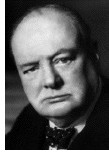 By May 1940, Britain had been at war with Nazi Germany for eight months and Conservative Prime Minister Neville Chamberlain had lost the confidence of his party and that of most of the public. He was forced to resign and was replaced by Winston Churchill (1874-1965) (pictured), who formed a coalition government with a war cabinet consisting of members of both main parties.
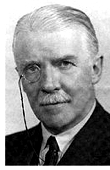 Herwald Ramsbotham (1887-1971) (pictured) came from 'a well-established Lancashire family with a long tradition of public service' (Middleton and Weitzman 1976:230). He had been elected Member of Parliament for Lancaster in 1929, and in 1931 was appointed Parliamentary Secretary to the Board of Education by Ramsay MacDonald.
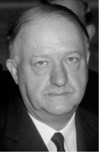 Richard Austen Butler (1902-1982) (pictured), commonly referred to as 'Rab' Butler, had first been elected to Parliament in 1929 and was Under-Secretary of State for Foreign Affairs when war broke out. After his spell at education, he went on to hold various senior ministerial posts.
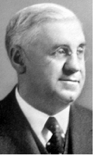 Norwood (1875-1956) (pictured) had been Head of Bristol Grammar School (1906-1916), Master of Marlborough College (1917-1925) and Head of Harrow (1926-1934). Now, in addition to being Chair of the SSEC, he was also President of St John's College Oxford.